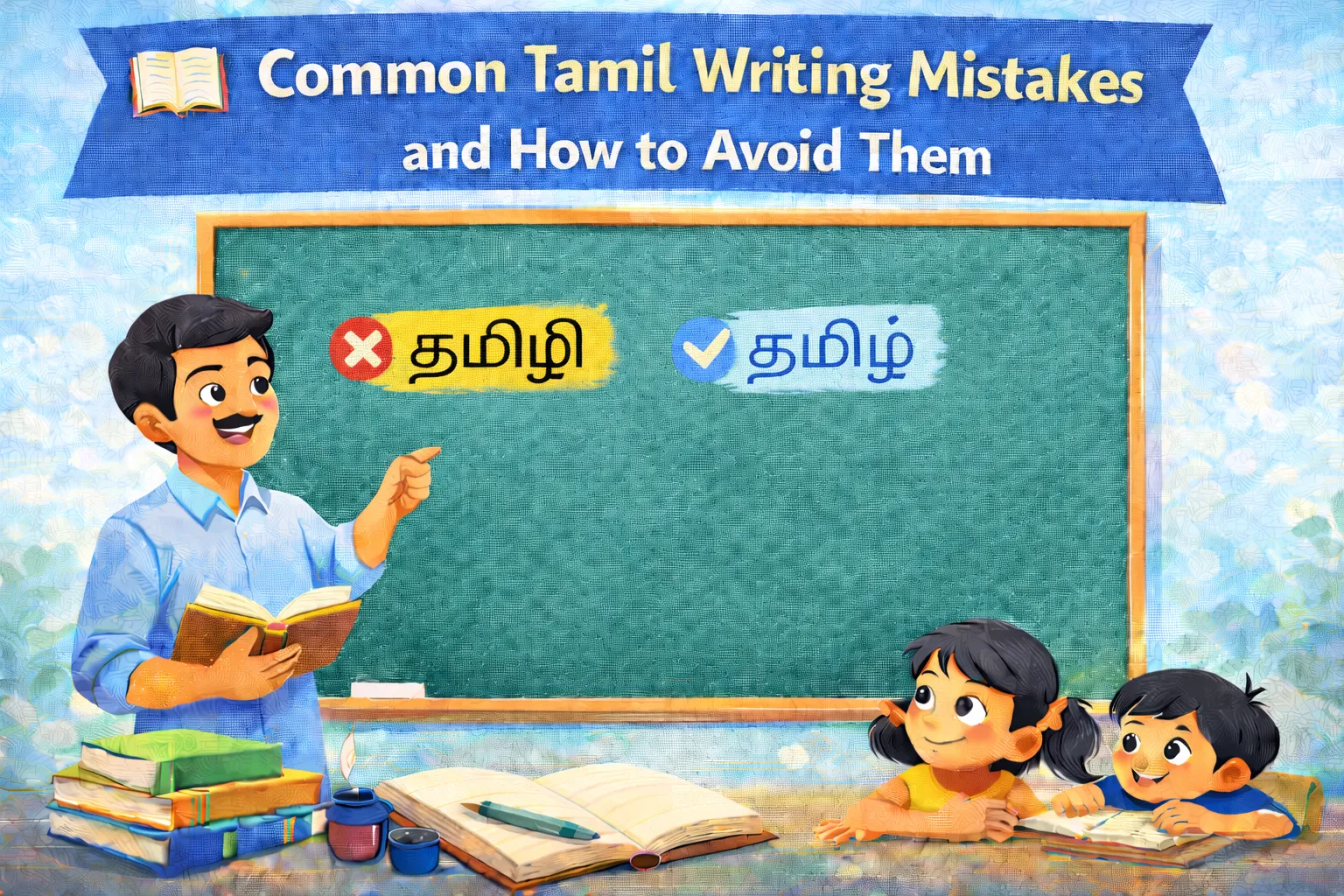
தமிழ் எழுத்தில் அடிக்கடி ஏற்படும் பிழைகள் மற்றும் அவற்றை எவ்வாறு தவிர்ப்பது என்பதற்கான விரிவான வழிகாட்டி. Even experienced writers stumble upon specific Tamil grammar nuances. This guide identifies the most common writing mistakes and provides actionable fixes to ensure your Tamil content is flawless and professional in 2026.
The Quest for Flawless Tamil (பிழையற்ற தமிழ்)
In the digital era, where content is king, the credibility of your writing rests on its accuracy. A single misplaced letter in Tamil can drastically change the meaning of a word—turning "Morning" (காலை) into a "Bull" (காளை). Whether you are writing a blog post, a novel, or a business email, mastering these distinctions is non-negotiable.
1. Mayangoli Errors (மயங்கொலிப் பிழைகள்)
The most notoriously difficult part of Tamil writing involves letters that sound similar but have distinct pronunciations and meanings. These are called Mayangoli letters. Mixing them up is the mark of an amateur writer.
A. The Three 'L's (ல, ள, ழ)
This is the unique identity of the Tamil language. Using the wrong 'L' is a critical error.
| Letter | Phonetic Position | Wrong Example | Correct Meaning |
|---|---|---|---|
| ல (Small La) | Tip of tongue touches upper teeth. | பள்ளி (Lizard) instead of பல்லி | பல்லி (Lizard) / பள்ளி (School) |
| ள (Big La) | Tongue curls back to touch palate. | வாளை (Banana) instead of வாலை | வாலை (Tail) / வாளை (Fish) |
| ழ (Special Zha) | Tongue curls deep back without touching roof. | வளம் (Prosperity) instead of வழம் | பழம் (Fruit) / பலம் (Strength) |
B. The Two 'R's (ர, ற)
Confusing the soft 'Ra' (Idaiyinam) with the hard 'Ra' (Vallinam) changes meaning instantly.
- அரம் (Aram): File (tool).
- அறம் (Aram): Virtue/Dharma.
- ஏரி (Eri): Lake.
- ஏறி (Eri): Climb.
Rule of Thumb: When in doubt, remember that the hard 'ற' usually signifies force or action (like climbing, throwing), while the soft 'ர' often relates to nouns or softer actions.
C. The Two 'N's (ந, ன) and 'Na' (ண)
While 'ந' (Indhu) usually appears at the start of a word, 'ன' (Ran-nagaram) and 'ண' (Tan-nagaram) appear in the middle or end.
- பணி (Pani): Work/Job.
- பனி (Pani): Snow/Dew.
- மனம் (Manam): Mind.
- மணம் (Manam): Scent/Marriage.
2. Sandhi Mistakes (ஒற்றுப் பிழைகள்)
The "Invisible Glue" of Tamil grammar. Omitting the conjunction letters (க், ச், த், ப்) is the most common error in professional writing.
Where to Add the Dot (Vallinam Migum)
You MUST double the following consonant when:
- Possessive (2nd Case): "பூனைப் பார்" (Look at the cat) - correct. "பூனை பார்" - wrong.
- Dative (4th Case): "வீட்டுக்குப் போ" (Go to the house).
- Demonstrative: "அந்தப் பையன்" (That boy).
- Direction: "கிழக்குத் திசை" (East direction).
Where NOT to Add the Dot (Vallinam Migadhu)
Adding a dot where it doesn't belong is hyper-correction and equally wrong.
- After 'Ithu/Athu': "இது கதை" (This is a story) - Correct. Do not write "இதுக் கதை".
- After Numbers: "ஒரு பழம்" (One fruit). Never "ஒருப் பழம்".
- After Vinaithogai (Verb Phrases): "குடி தண்ணீர்" (Drinking water). Never "குடித் தண்ணீர்".
3. Spoken vs. Written Tamil (பேச்சு வழக்கு vs எழுத்து வழக்கு)
Writing exactly as you speak is a major stylistic error in formal contexts. Spoken Tamil swallows suffixes; written Tamil must restore them.
| Spoken (Avoid) | Written (Correct) |
|---|---|
| வந்தாச்சு (Vanthachu) | வந்துவிட்டார் (Vanthuvittar) / வந்தது (Vanthathu) |
| பண்ணுங்க (Pannunga) | செய்யுங்கள் (Seiyungal) |
| எவ்ளோ (Evlo) | எவ்வளவு (Yevvalavu) |
| போயிட்டு இருக்கேன் | சென்று கொண்டிருக்கிறேன் |
| சுத்தி பாரு | சுற்றிப் பார் |
Exception: You can use spoken forms only when writing dialogue in a story or a casual social media caption. For articles, essays, and emails, strictly use Written Tamil.
4. Singular-Plural Mismatch (ஒருமை-பன்மை வழு)
In English, "The dogs runs" sounds wrong. Similarly, in Tamil, the verb ending must match the subject count.
- Wrong: மரங்கள் வளர்ந்தது. (Trees grew - singular verb).
- Correct: மரங்கள் வளர்ந்தன. (Trees grew - neuter plural verb).
- Wrong: அவர்கள் வந்தார். (They came - singular honorific).
- Correct: அவர்கள் வந்தார்கள். (They came - plural suffix).
5. Honorific Errors (மரியாதைப் பிழைகள்)
Using singular verbs for elders or respected figures is considered culturally offensive.
- Disrespectful: ஆசிரியர் சொன்னான். (The teacher said - singular).
- Respectful: ஆசிரியர் சொன்னார். (The teacher said - honorific).
6. Grantha Usage (வடமொழி எழுத்துக்கள்)
While purists advocate avoiding Sanskrit sounds (Grantha letters like ஜ, ஷ, ஸ, ஹ, க்ஷ), in modern 2026 contexts, clarity often trumps purity. However, inconsistency is a mistake.
- Mixed: "லக்ஷ்மி" (Lakshmi - Grantha) vs "இலக்குமி" (Pure Tamil).
- Mistake: Switching between styles in the same document. Choose one style (Pure Tamil or Modern Tamil) and stick to it.
- Common Error: Writing "வருஷம்" (Varusham) instead of the proper Tamil "ஆண்டு" (Aandu) or "வருடம்" (Varudam).
7. Redundancy (மீமிசை)
Repeating the same meaning twice in a sentence.
- Wrong: "மீண்டும் மறுபடியும்" (Again and again - both words mean the same).
- Correct: Use either "மீண்டும்" OR "மறுபடியும்".
- Wrong: "ஒரு தனி மனிதன்" (A single lone man).
- Correct: "ஒரு மனிதன்" or "தனி மனிதன்".
8. Punctuation Nuances
Tamil sentences can be long. Misplacing a comma can confuse the reader about where a clause ends.
- Quotation Marks: Tamil punctuation places punctuation inside the quotes for dialogue. Example: "நான் வருகிறேன்," என்றார்.
- Full Stop: Ensure sentences don't run on endlessly with "and" (மற்றும்). Break them into smaller, digestible sentences.
How to Proofread Effectively
- Read Aloud: Your ear will catch 'Sandhi' mistakes that your eye misses. If the flow halts, check the grammar.
- Check the Verb Ending First: Does it match the Subject (Gender, Number, Person)?
- Scan for 'La-La-Zha': specifically target words containing ல, ள, ழ and verify spelling against meaning.
- Use Tools: Utilize TamilGrammarChecker.com for a quick automated sweep before final publication.
Writing error-free Tamil is a sign of respect for the language and your readers. By avoiding these common pitfalls, you elevate your writing from casual text to professional literature.
Fix Your Mistakes Instantly
Our Tamil Grammar Checker catches all these errors!
The Tamil Grammar Team at tamilgrammarchecker.com is made up of Tamil language scholars, linguists, and software engineers dedicated to making Tamil writing better for everyone.